By miss minimalist |
[Earlier this year, I ran a series called Real Life Minimalists, in which I invited readers to submit their own stories. I’d love to revive it, and thought I’d start by jumping into the ring myself. If you’d like to participate, click here for details.]
When I started this blog, I had no idea what kind of response I’d receive (to be honest, I never expected more than a handful of people to read it!). I didn’t know if people would find my minimalism a little weird, somewhat wacky, or way off the deep end. Most of all, I didn’t know if there were any other kindred souls out there.
Therefore, I chose to remain anonymous. That way, I could write about how many shoes, towels, or paperclips I owned without having to answer for my “eccentricities” in real life. I could wax poetic about white walls, empty rooms, and naked windows without putting my name on these musings.
Along the way, however, I discovered that this is who I am. I’m the woman who sold all her possessions and moved to a foreign country. I’m the woman who owns four pieces of furniture, and eloped with her wedding dress in a ziplock. I’m the woman who travels the world with a tiny bag, loves living without a TV, and would like to eat every meal out of a single bowl.
And I’m proud to be her!
Therefore, I’ve decided to come out of anonymity: I’m Francine Jay, and I’m a minimalist.
I’m an American writer currently living in England. I published my first book, Frugillionaire: 500 Fabulous Ways to Live Richly and Save a Fortune, last summer.
So what’s a minimalist doing writing about frugality? Actually, I’ve found that the two pursuits often go hand in hand.
The book isn’t about clipping coupons, or finding the lowest credit card rates; it’s about saving money by simplifying your life. My goal was to make saving easy and enjoyable, and explain how one could live a rich life by consuming less.
(Click here if you’d like a peek at the Table of Contents and Introduction.)
If you’re interested in reading it, you can pick it up on Amazon.com; for those of you downsizing your books, it’s also available on Kindle.
When I’m not writing, I enjoy traveling, doing yoga, reading philosophy, and rambling the English countryside. Although I’m a city girl at heart, I’ve recently become enamored with strolling through pastures of sheep and meadows of wildflowers.
My short term goals are to publish a second book, and make more of my own food from scratch (like bread, yogurt, and tofu). I’d also love to learn to snowboard, speak Japanese, and play pedal steel guitar.
My long term goals are to see as much of the world as possible, and make some kind of positive contribution to society (I’m not sure exactly how yet, but I’m working on it!).
By writing about minimalism, I hope to promote it as a lifestyle alternative. I want others who are dissatisfied with consumer culture to know they’re not alone. I think it would be wonderful—for ourselves, for the Earth, and its other inhabitants—if we all learned to live with a little bit less.
Well, I hope that takes a little of the mystery out of “Miss Minimalist.” You can still call me “Miss M” if you like, or Francine if you prefer. And now that you know who I am, stop and say “hi” if you see me on the streets of London…
{If you’d like to read more about minimalist living, please consider subscribing to my RSS feed, or signing up to receive new articles by email.}
By miss minimalist |
I recently received an email from a reader named Elise, who wrote: “You mentioned that you are married. I’d love to know what you have done with your wedding dress and other keepsakes.”
Great question, Elise! After the big day, many women struggle with how to store the “dress of their dreams”—as well as all the other stuff they accumulated from the ceremony and celebration.
Fortunately, I was a minimalist before I got married—and knew I could never manage to drag around a big, bulky, and delicate garment for the rest of my life. My husband and I also wanted little to do with the usual marriage accoutrements (favors, invitations, albums, cake, presents, and the like.)
Therefore, instead of a traditional wedding, we eloped and got married in Iceland. Now, as many of you know, I’m an inveterate carry-on traveler—and I was not about to make an exception for this occasion (especially considering the dilemma I’d have if my luggage was lost!) Getting married abroad, therefore, presented a unique packing challenge: how to transport a dress, shoes, and other accessories in my carry-on bag.
An over-the-top, white satin “princess” dress, complete with veil and train, were obviously out of the question (and not really my style anyway). To top it off, I had little shopping time; we had only a month to do all the requisite paperwork, and get ourselves together, before departure. (As you may have surmised, my husband and I are pretty spontaneous and not particularly adept at long-term planning).
I had one requirement for a wedding dress: that it fit in a standard-size ziplock bag, for easy, no-worry transport. Fortunately, I found just such a garment: a cocktail-length lace dress in pale blue and gold (see photo above). It folded down to practically nothing, and the fabric showed no wrinkles. I accessorized it with a long white cardigan (it’s cold in Iceland!), and some kitten heels that were slim enough to fit in my toiletry bag.
After a short and sweet ceremony, we sent out postcards of Reykjavik (the capital of Iceland, and city in which we were married) to announce our wedded bliss. In lieu of a reception, we went for a nighttime dip in the Blue Lagoon. By keeping things simple, we deftly sidestepped the barrage of gifts that usually accompanies such an event: china, flatware, fondue sets, linens, small appliances, etc. (We already had a furnished household, and certainly didn’t need any more stuff!) Friends and family were content to treat us to dinner, and bottles of wine and champagne, after we returned home.
Therefore, the only “keepsake” we have to store is our marriage certificate. Our photos are all digital, and my dress is now part of my regular wardrobe. We have no “wedding china,” “wedding linens,” or other sentimental “wedding things” that we’ll feel obligated to keep for the rest of our lives.
My advice to single minimalists: if you take the plunge, keep it simple. Otherwise, you may accumulate a lifetime’s worth of stuff in just one day!
I’d love to hear how others have dealt with wedding dresses, gifts, and other keepsakes!
By miss minimalist |
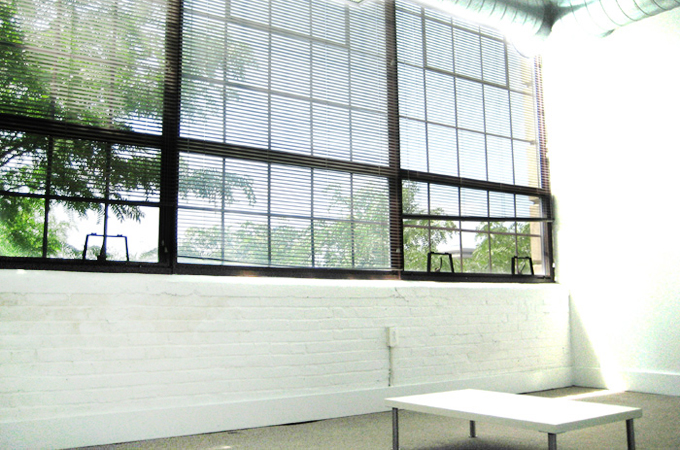
 A fresh start.
Don’t get me wrong, apartment hunting in a foreign country was an exciting experience—in fact, it’s something we’d always fantasized about on our travels. Unfortunately, however, it marked the end of our blissfully minimalist, hotel life.
It had been my long-time dream to live in hotels, with nothing more than a single suitcase; and I was fortunate enough to realize it, for six weeks, while we moved from the US to the UK (see My Minimalist Story, Part 3: My Life in a Duffel Bag).
For minimalists with deep pockets, it’s a great way to live. But for those of us with more limited budgets, it can’t go on forever. The weekly rate at our last hotel was just shy of what we’d pay for a month’s rent in an apartment.
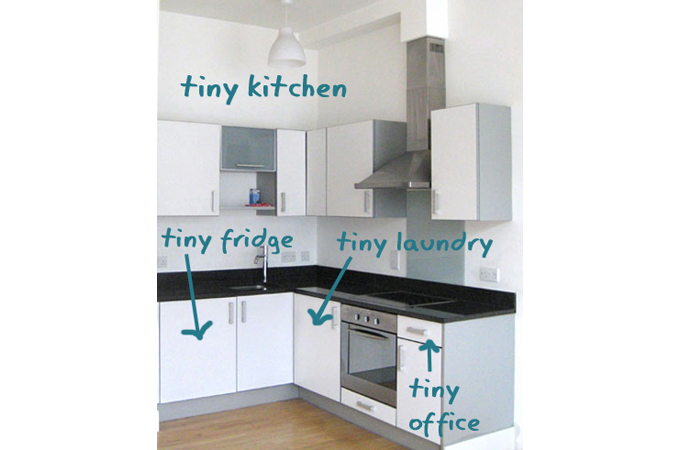
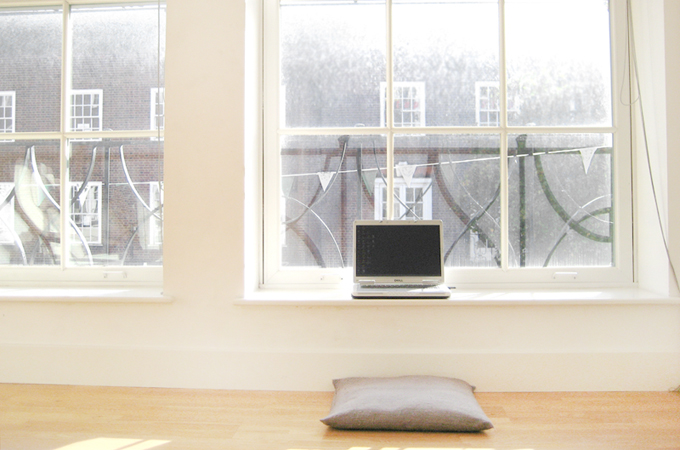
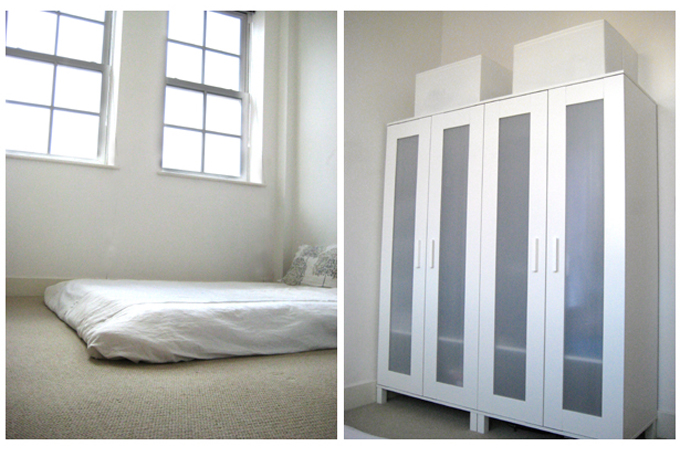
Our challenge then, was to continue living as minimally as possible in a place of our own.
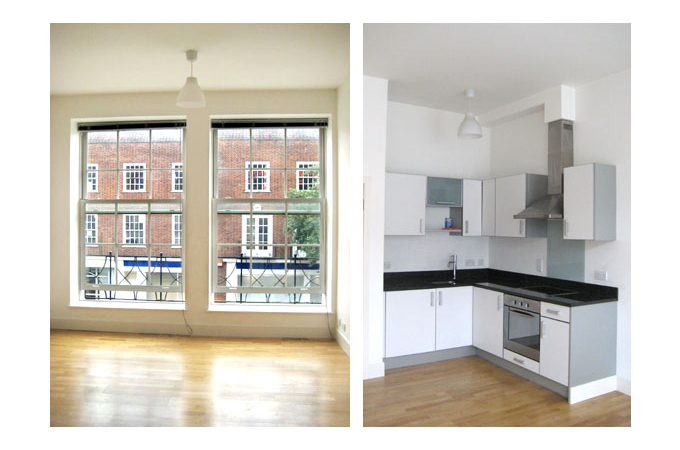
First, we had to decide whether to look for a furnished or unfurnished flat. We were surprised to find that furnished flats are more prevalent than unfurnished ones here in the UK (the opposite of our experience in the US). The concept was tempting: we’d have all the stuff we’d need, without actually having to own it.
The problem: our minimalist aesthetics. Most of the apartments seemed over-furnished, with more chairs, dressers, tables, etc. than we’d ever really need (or want). While such a life might technically be minimalist, it certainly wouldn’t look (or feel) that way.
Plus, we wanted to explore living life with just the bare minimum. Starting with an empty slate seemed necessary to truly determine the essentials.
So the day our lease started, we moved our duffel bags into our empty flat—and promptly realized we were going to need some of those things we’d taken for granted in the hotels! We made an emergency trip to Tesco (the UK equivalent of a Target or Walmart), and came back with towels, pillows, sheets, and a kettle—the very first possessions of our new life.
That night, we once again slept on the floor, just as we had the night before our closing. But this time, we were at the end of the ultra-minimalist part of our journey. From here on out, we’d be acquiring rather than purging, buying rather than selling, getting rather than giving. I dreaded the idea of having to re-purchase so many of the things we’d just gotten rid of.
At the same time, however, I was thrilled to have been given a “do-over.” I regarded this new beginning as a chance to determine, and acquire, only those things that met our needs—and nothing more. Finally, I had the opportunity to discover that elusive point of just enough.
By miss minimalist |
From the time we decided to move overseas, my husband and I fantasized about owning nothing more than we could carry with us. We were determined to get rid of all of our possessions, and pare down our lives to a single suitcase each.
We almost achieved our goal. But in our final week of purging, we were weakened by the uncertainty of our plans. My husband had a job offer in the UK, but it was contingent upon us receiving our visas—which, given strict new immigration laws, was not guaranteed. (We did finally receive them, two weeks after moving out of our house.)
Furthermore, we had no idea how long we’d stay. What if we didn’t like England? What if my husband wasn’t happy with his job? What if he was transferred after 6 months or a year?
So that’s how we ended up with our dirty little secret: a 5 foot by 5 foot storage unit.
Though no bigger than a small closet, it may as well be an entire warehouse for the grief it causes me. Just the fact that it exists makes me feel like I’m not as minimalist as I could be.
The contents of that closet are things we deemed irreplaceable, or too expensive to re-purchase: an Eames chair, a Danish design sofa (now discontinued), a few boxes of books and paperwork, and a couple of items from our travels. We also included our bikes, since we had the space.
If we decide to stay in the UK, we’ll have them shipped over here. If we return to the US, we’ll bring them back into our lives. But for now they sit in limbo, things without a home.
The day we moved our stuff was the first time I’d ever been in a public storage building. What an eerie place! It was unnervingly quiet, with nothing but the sound of our footsteps echoing through the halls. Lights would turn on automatically as we approached each section, and go dark again after we passed by.
The hallways were completely empty, but we knew that behind the blank, uniform doors sat thousands upon thousands of things—silent, waiting, and in some cases, probably forgotten. The air was heavy with their presence. It reminded me of a jail—a prison for people’s stuff. I felt sorry for our things as we turned the key and locked them away.
We don’t speak of it very often, and the monthly charge is debited automatically from our bank account. It’s easy to pretend it doesn’t exist, but in the back of our minds, we know we’ll have to deal with the contents on our next trip back to the States—whether to dispose of them, or accept the expense of shipping them over.
So, the question is, how little must one have to be truly “minimalist?” Only what you can carry on your back? In your car? In a van? Should the items be such that you could dispose of them without regret each time you move? Should you have no attachment to individual things, no matter how irreplaceable or costly they may be? Or is there room for a few, well-loved pieces that follow (or wait for) you wherever you go?
These are the issues I’m considering now, as we “rebuild” our lives in the UK—because, above all, we don’t want to be burdened by another set of things when (and if) we decide to move on.
 Left: a prison for possessions. Right: inside the cell.
By miss minimalist |
For six weeks this summer, I lived my minimalist dream—residing in hotels, with all my possessions in a single duffel bag.
My husband and I purged almost all of our stuff, and sold our house at the end of July (see My Minimalist Story, Part 2: The Great Unraveling). However, we still had to wait several weeks for our visas to be processed before we could move to the UK. In the meantime, we “lived” in a series of hotels, as we wrapped up our old life and prepared for the new.
We each had pared down our things into one (large) duffel bag. Normally, we wouldn’t carry such unwieldy luggage, but it was the most cost-efficient way to transport our stuff across the ocean. The airline would carry our bags for free under our checked baggage allowance, whereas shipping the equivalent amount by post would have cost several hundred dollars.
[Now, I have to admit, I originally had packed a larger bag, in order to take full advantage of this free transport. The problem: I could barely lift it, let alone lug it any further than a few feet. It’s a humbling experience to have to physically carry everything you own; only then can you truly feel how much your belongings weigh on you. In the end, I had to purge some additional items, and trade down to a smaller, more manageable bag.]
In my bag, I’d arranged my possessions in packing cubes—one for pants, one for shirts, one for underwear, etc. I had an “office” cube that contained essential papers for work, our visas, and our move; a “kitchen” cube with my spork, titanium cup, tea bags, and power bars; and a “pharmacy” cube with toiletries, medicine, and other supplies. I arranged the packing cubes in stacks in my duffel bag, so that I could retrieve the appropriate one as easily as opening a drawer.
What a wonderful way to live! I had never before reached this level of organization—a place for everything, and everything in its place. It’s a principle I’d always tried to live by; but our house had too many nooks and crannies for things to hide. Some restless items always seemed to sneak out of their spots and roam around. Here, they stayed still by necessity—if they tried to make a break for it, they could very well be left behind.
The afternoon of our closing, we moved into a highway EconoLodge. The tiny room was almost entirely bed, with only two feet on either side. Space was so tight, we had to stack our duffel bags on top of one another, just to leave a path to walk. It was certainly an abrupt change from the spacious, three bedroom house we had just left! But when you don’t have a lot of stuff, you don’t need a lot of space. We qualified for the hotel’s “long term” rate (7 days+), and actually got quite a kick out of imagining it our permanent residence.
It’s interesting how your perspective of “home” changes when you’re without one. We stayed in four different hotels during our transition, never remaining in any one longer than two weeks. And yet it was amazing how quickly we’d “settle in” to each new spot. Just a day or two after checking in, my husband and I would find ourselves saying things like “meet you at home later” or “are we staying home tonight?” Our home was simply wherever our stuff happened to be at the moment.
It made me think about our past apartments and houses—we’d never considered any of them permanent (even the one we’d just sold). In fact, prior to our previous house, we’d never lived anywhere longer than two years. In essence, they were all just temporary places where we’d kept our stuff, and met up at the end of the day. Places that provided shelter from the weather, and someplace safe to sleep at night. Was that the definition of home? And if you carried all your stuff with you, could you be at home anywhere?
After the Econolodge, we moved onto an Extended Stay efficiency, then flew to England, where we stayed in two more hotels while looking for a flat. I loved our mobility, and got a particular thrill every time we changed hotels. On the morning of checkout, we’d have everything packed and ready to go in a matter of minutes (versus the month it took us to move out of our house!). We never felt like we were stuck anywhere, and always had something “new” to look forward to.
At the airport, our luggage seemed equivalent to that of people going on a long holiday. Nobody would have guessed we were moving our worldly possessions across the globe—for all they knew, we were two tourists setting out on a nice vacation. Which, actually, is very much how we felt—because when you’re not loaded down with a houseful of stuff, life can feel like an extended vacation.
By miss minimalist |
Most of us spend our lives in a constant state of accumulation.
It all starts when we leave our parents’ homes, and start acquiring the “stuff” to lead independent lives. What begins with a couple of plates, milk crates, and linens in college evolves into furniture, cookware, tableware, and decorative items when we get our first apartments. From then on, it’s a continual process of adding and upgrading as our abodes grow larger, and our lives more complex.
What’s more, we’re cheered on along the way. Our acquisitions are encouraged by advertisers, and celebrated by family and friends. We’re given housewarming parties and shower gifts, and congratulated when we purchase a new TV or living room set. It’s almost as if our stuff becomes the measure of our lives, with “more and better” meaning we’re moving in the right direction.
Which makes it all the more interesting when you decide to do the opposite.
Before my husband and I moved overseas, we decided to get rid of our stuff, rather than move or store it (see My Minimalist Story, Part 1: A Clean Slate). We’d been living together since college, so our possessions represented our entire history together, from our first apartment to our current house.
What had taken over a decade to accumulate, we had one month to purge. Things we had coveted, pondered over, saved up for, shopped for, and excitedly brought home. Things that reflected our interests, tastes, travels, and activities. Things we’d bought to celebrate holidays, birthdays, and anniversaries. We’d slowly woven this tapestry of stuff, telling the story of our lives, and now we had to unravel it.
When we told others what we were doing, it was clear we’d upset the natural order of things. Though we had the support of our closest friends and family, many people couldn’t comprehend why we’d want to get rid of the things “we’d worked a lifetime for” (we’re not that old). Others wrote us off as flighty, eccentric, or a little crazy.
No matter—my husband and I dove into the project with enthusiasm. We split the Craigslist duties, and hardly needed to consult each other on individual items. We knew instinctively the very few things that were special to us; everything else could go without regrets. If one of us wavered, the other would chant, “non-attachment, non-attachment.” The experience was nothing short of cathartic.
Here’s the room-by-room breakdown of our Great Unraveling:
Kitchen. We purged everything, save for our sporks, titanium travel cups, a corkscrew, my husband’s favorite knife, and two masu (sake cups) from Japan. We donated, or gave away, every plate, pot, pan, appliance, and utensil—they were simply too heavy and unwieldy to be worth shipping.
Bathroom. We disposed of everything, except the toiletries we decided to take with us. No sense in shipping towels or shower caddies!
Living room. We gave away decorative items, and sold our TV, stereo system, and all furniture except for two pieces—one impossible, the other too costly, to replace. (If you’re curious, the survivors were the sofa and chair in the photo that accompanies Farewell to My Minimalist House.) This was a tough decision—we didn’t really want to keep anything, but we knew we’d regret disposing of them.
Office. We sold our desks, chairs, and bookshelves, as well as all computer equipment except our laptops and a backup hard drive. We gave away (or otherwise disposed of) every last pen, paper clip, rubber band, envelope, file folder, and miscellaneous item in our overflowing stationery supply box. (In hindsight, we should have saved a handful of essential office supplies, to avoid having to buy mass quantities of them here.) We digitized our photos, and scanned and/or shredded the majority of our paperwork. We kept two boxes of important documents (taxes, real estate, financial), and allowed ourselves one box each of books.
Bedroom. We disassembled and disposed of our homemade platform bed, donated the bedding, and left the armoire with the house. We ruthlessly purged our closets, editing our wardrobes down to our favorite, most versatile, and most often worn pieces. It was liberating to suddenly have “permission” to get rid of all those things that weren’t quite right. No longer was I obligated to keep stuff that might someday fit again, come back into style, or be used for “dirty work” around the house!
Guest room. We sold the furniture (futon and small table), and donated the bedding.
Basement. We sold, gave away, or left for the new owner all the lawn and garden equipment, tools, and household supplies. We kept only our bikes (mainly because DH’s would be more costly to replace than store/ship).
Those weeks were full of chaos and activity, with a constant stream of friends, family, neighbors, and strangers parading through our house and carting away our possessions. It was like a strange dream. Between purging our stuff, preparing for settlement, packing, and wrapping up things at our jobs, we had little opportunity to consider exactly what was happening.
It wasn’t until the night before closing that the full impact of what we were doing finally hit us. As our voices echoed through the empty rooms, we realized that almost everything we’d ever owned was really gone. No longer would we be coming back to our familiar house, with our familiar furniture, and our familiar stuff. For the next six weeks, we’d be living in highway motels, awaiting our visas—then starting a brand new life in a foreign country. Fortunately, any nervousness we might have felt was drowned out by the excitement, and sheer extraordinariness, of the situation.
We slept on the living room floor that night, our two duffel bags lined up at the door, ready to start our adventure in minimalist living.
By miss minimalist |
I think every minimalist fantasizes about starting over with a clean slate—it seems a heck of a lot easier than the slow (and sometimes painful) process of decluttering the stuff you’ve accumulated over a lifetime. I for one had been decluttering for years, and still seemed nowhere near my goal of living with just the essentials.
But short of a fire, natural disaster, or other tragedy (which nobody wants to experience), there are few circumstances that would suddenly separate you from the bulk of your possessions.
Recently, I received my unique (and possibly once-in-a-lifetime) opportunity for a clean slate: an overseas move.
My husband and I were thrilled about the prospect; for years, we’d dreamt of experiencing life in another country. But reality quickly set in: what on earth would we do with all our stuff?
We had no desire to take all our possessions with us; in fact, the cost of moving them probably would have exceeded their value. Furthermore, we had no address (we’d be looking for a place to live upon arrival), no idea of how long we’d be there, and the thought of dragging hundreds of tidbits across the sea seemed ridiculously burdensome.
Our other option was to put everything into a public storage unit, to be dealt with later. However, that almost seemed like cheating (or at least procrastinating). How could we start a new life, when all the trappings of our old one were bundled up in a warehouse, waiting for us to come “home?” We knew if we kept it, our stuff would continue to weigh on us from across the ocean.
So from the time our house went under contract, we had one month to empty its entire contents. And for an aspiring minimalist like myself, what a euphoric month that was!
Don’t get me wrong, selling things on Craigslist is no walk in the park. It takes a lot of effort to photograph your stuff, describe it, and answer an unending stream of emails about it. Not to mention sell it at a price far less than what you paid. But it was worth every bit of the hassle. That continual parade of buyers lifted the burden of our possessions from us, one-by-one, giving us the freedom (and a little extra cash) to embark on our new adventure.
In the end, my husband and I were each left with one bag (to carry with us), two boxes of books and clothes (to be shipped later), and a handful of items in long-term storage (more on those later).
I only wish I’d had the time to provide a post-by-post account of the experience—but as it turns out, there was little time for blogging (or much of anything else) with precious few weeks to purge, pack, and plan a life in a foreign country. But that’s okay; I’m not sure I could have effectively expressed the utter joy of seeing our bar stools, coffee table, or weed whacker walk out the door for the last time—at least in a way that wouldn’t get me institutionalized.
So over the next few weeks, I’ll provide my post-mortem account of what it was like to get rid of everything, and live my minimalist dream—residing in hotels, with all my possessions in a single duffel bag. That’ll catch you up to where I am now. Stay tuned.
By miss minimalist |
 Little Miss Minimalist: "Just one, please!"
The A&E show “Hoarders” has prompted many a debate over whether the inclination to hoard is something people are born with, or something they learn.
I’ve often wondered the same about minimalism—and mainly because it’s been part of my psyche for as long as I can remember.
I’ve been told that in my early years, I found it upsetting to have toys, clothes, and other things scattered around me. Apparently, nothing made me happier than putting things “away.” My parents assumed they had an extraordinarily tidy toddler. Looking back, however, I’m not sure it’s neatness that motivated me (I had little interest in dusting or vacuuming), but rather an innate aversion to the distraction of too much stuff. To my young mind, hiding it in drawers, chests, or closets made it disappear.
My earliest recollections of being uncomfortable with “things” center around Christmas. Although I’d be just as excited as the next kid to open presents, the thrill would wear off shortly after they were all unwrapped. Or, more precisely, when I had to remove them from under the tree and take them to my room.
I remember being distraught about where to put everything, and simply shoving the whole pile into the back of my closet—I didn’t even want to see the things I’d been so excited to receive. I’d unearth things one by one if I had the desire for them at a later date; but, I’m embarrassed to say, some of those items would stay out of sight (and out of mind) until the following holiday.
When I grew older, this compulsion to “hide” such gifts turned into a penchant to return, regift, or otherwise discreetly dispose of them. (It’s no wonder that my friends and family now give me nothing but consumables.)
My minimalism took on more concrete form when I became old enough to have a say in my room’s decor. Until that point, I’d had a well-appointed little princess’s room: a beautiful canopy bed, floral duvet and curtains, and entire suite of vanity, dressers, and bookcases. Of course, I wanted none of it. Around my early teen years, I had everything removed save for a dresser, bookcase, and simple bed (just box spring and mattress). I was exhilarated at the transformation, and for the first time regarded my room as someplace I could “breathe.”
I don’t know why I’ve always felt “stifled” by stuff. My parents are neither hoarders nor minimalists, and the household in which I grew up was neat, well-maintained, and had what I’d call a “normal” number of possessions. My behavior certainly wasn’t influenced by any extreme experience or environment.
But while my number of belongings has ebbed and waned with the circumstances of my life, I’ve always felt happiest when I’ve had the least amount of stuff. And disposing of unnecessary items never fails to provide me with a natural high.
So, should I call A&E and pitch a companion series called “Purgers?” (You heard it hear first!) Would anyone want to watch a group of minimalists obsessively cleaning out their closets? Unfortunately, I’m afraid that no matter what dramatic camera angles are used, shots of spare, uncluttered spaces simply won’t have the same shock value. (Although interventions in which well-meaning relatives try to add throw pillows to their sofas might be entertaining!)
I’d love to hear from anyone else who thinks they may have been “born minimalist.” Please leave a comment and let me know I’m not alone!
|
my
new book

blog collection

|